Accelerating the Uptake of Large Thermal Energy Storages
- Task 45
- Currently running
- Energy storage in energy systems
Link to online formular: ask your question about LTES to IEA ES Task 45 experts
Recordings of Q&A sessions
Planning, legal, regulatory and societal aspects
Legal aspects (LTES)
Is the new revision of the EU Renewable Energy Directive (RED III) expected to reduce the time needed for getting a permit for LTES? If yes, how much?
The new revision of the EU Renewable Energy Directive (RED III) is designed to significantly shorten permitting times. In areas designated as “renewable acceleration areas,” the permitting process should take no more than 12 months, and a maximum of 2 years outside those areas. However, whether it actually speeds up the process depends on how each country implements the directive into national law.
More importantly, the faster permitting rules mostly apply to storage projects that are built together with renewable energy production (such as wind or solar farms) and share a grid connection. For example, in Germany, only wind energy projects currently benefit from the acceleration areas, and thermal energy storage is rarely combined with wind power. This means the practical effect on LTES permitting times, especially for thermal storage, may be limited in some countries.
Additionally, certain types of storage, such as large-scale thermal storage or geothermal systems requiring significant groundwork, may not be covered by these faster permitting rules due to specific exceptions. Therefore, while the directive has the potential to reduce permitting times in theory, the real-world impact for LTES will depend on the specifics of national implementation and storage technology involved.
Answered during Q&A session 2.1 of IEA-ES Task 45, see following link
What policies or incentives could accelerate the adoption of LTES? (in context of waste heat recovery from households)
During the first webinar of LTES Task 45, the EU RED III directive was discussed, but its practical impact has remained limited. This is mainly because many countries have not yet translated it into supportive national or local frameworks for LTES. As a result, project development is slowed by limited awareness and expertise, and approval processes can be lengthy. For example, in the Netherlands, obtaining permits is challenging even for tank thermal energy storage, while PTES and BTES projects also face regulatory hurdles.
A revised directive (RED IV) is currently under development and is expected to better address large-scale thermal energy storage, potentially accelerating project deployment. At present, however, permitting conditions remain relatively unfavourable.
One of the objectives of Task 45 is therefore to raise awareness of the benefits of thermal energy storage technologies, highlighting that such projects are generally not overly complex and have limited environmental impact.
Answered during Q&A session 2.2 of IEA-ES Task 45, see following link
Urban planning (LTES)
How can LTES be included in urban planning? And how easily can a city prioritize LTES construction and integration?
In Germany, large thermal energy storages are usually not located in cities or densely populated areas, but outside in green field areas, which are highly protected under German planning law. Permitting is difficult, and this is a question not clearly answered by either law or jurisdiction.
There are significant uncertainties around planning and legal interpretation. Thermal energy storage is not a high priority in Germany at the moment – the law and heat planning frameworks are currently being revised, and lobbying work is still needed. This is an area where Task 45 can play a role.
There is an obligation for heat planning in European cities with more than 45,000 inhabitants, and LTES should be part of that planning process. Heat mapping in particular can reveal, for instance, excess heat during summer periods – making long-term storage an attractive option. When more detailed heat planning is carried out in Denmark, an EnergyPRO calculation is typically made to assess the economic feasibility of storage. Regarding land availability, land is expensive in Germany, but if storage is needed it can still be cheaper to pay, for example, 200 euros per square meter for land than to build a tank storage. So LTES is an interesting option, but one needs to look for the right conditions when doing heat planning.
Answered during Q&A session 2.1 of IEA-ES Task 45, see following link
Market potential (LTES)
What is the needed LTES installed capacity to achieve net-zero carbon emissions in 2050 for Europe or for specific European countries? Are there reports giving this information?
The EU-funded project TREASURE forsees a PTES capacity of 71 TWh by 2050 (in the EU), which corresponds to over approximately 8 thousands PTES of 250’000 m³. Some results and approaches were presented at the conference EuroGeo 8 in Lille in 2025. The report is accessible here (pages 148-156). However, the project focuses on Europe and does not address regional demands.
Two key studies by Aalborg University analyse LTES in Denmark under a 2050 carbon-neutral scenario, using a cross-sectoral approach. The first one assesses how integrating multiple sectors – such as electricity, heating and cooling, industry, and transport – affects system performance, costs, and renewable energy utilisation (link here). Another AAU study focuses specifically on how thermal energy storage should be implemented towards 2040–2050 addressed both PTES and TTES at the national level, considering TTES primarily for short-term storage and PTES for long-term heat storage (link here). Additionally, a national analysis conducted in Germany within the IEA-ES Task 35 (Flexible Sector Coupling) assessed the impact of integrating LTES with district heating (link here). Overall, these studies consistently indicate that increasing the share of LTES has a positive effect on the energy system.
Furthermore, the national storage strategy of Germany published in 2024 (link here) indicates a demand for LTES in Germany in a range of 625-871 GWh thermal storage capacity.
Answered during Q&A session 2.1 of IEA-ES Task 45, see following link
Is there some top-down estimate of the required regional short- and long-term LTES capacity for district heating?
There appears to be no clear top-down estimate of LTES at either regional or national level that differentiates between short-term (daily) and long-term (weekly or seasonal) storage. For example, the TREASURE project provides an estimate of PTES potential—71 TWh of capacity in the EU by 2050—but does not distinguish between short- and long-term storage needs, and its scope is limited to the EU as a whole despite using a top-down approach. The most comprehensive study addressing different LTES technologies is likely the one by DTU, which considers both TTES (for short-term storage) and PTES (for long-term storage). However, this analysis is based on detailed energy system modelling rather than a top-down methodology.
Answered during Q&A session 2.1 of IEA-ES Task 45, see following link
Which technology appears most promising for widespread adoption: PTES, ATES, or BTES? And why?
Each technology comes with its own strengths and limitations, making some more suitable than others depending on the application, location, or context.
For example, PTES can charge and discharge large amounts of heat quickly, making it suitable for daily, weekly, or even seasonal storage. On the other hand, high groundwater levels and large land footprint pose an issue, and they are easiest installed in areas with specific geology, allowing cost-efficient excavation works of the pit.
ATES and BTES can also store very large quantities of heat and are more suitable for seasonal storage and less for short-term storage due to inertia. Specific geological requirements have to be met to allow an efficient introduction of BTES and ATES. Typically, these systems generally have a limited land footprint, as the surface above the storage volume remains largely unaffected—unlike PTES, where the installation significantly alters the land use.
Answered during Q&A session 2.2 of IEA-ES Task 45, see following link
Is there a need in industry or business opportunity for LTES in supplying heat for industrial processes?
There are both needs and opportunities for LTES in industrial processes, particularly by decoupling excess heat generation from heat demand. LTES enables the capture and reuse of surplus heat that would otherwise be wasted, for example in district heating, potentially creating additional revenue streams. It can also support peak shifting, allowing industries to use previously stored excess heat to meet later demand, thereby reducing the need for new heat generation and lowering costs.
Relevant applications include PtX plants, data centres, breweries, and the dairy industry.
However, a key barrier is the investment horizon: LTES systems typically involve long payback periods, which can discourage businesses and investors from adopting the technology.
Answered during Q&A session 2.2 of IEA-ES Task 45, see following link
Financial aspects
Is it possible to start with planning the design before the feasibility study is finished? The reason for this would be in order not to lose subsidies.
A preliminary design of thermal energy storage systems is feasible if key parameters are known, such as an estimate of the required heat storage, target capacity, and expected temperature levels. Based on these inputs, an initial sizing can be derived, followed by approximate assessments of space requirements and installation depth. This approach has been described in Task 39, Deliverable A1, which provides screening methodologies for different storage technologies.
While such early-stage design is possible, its value depends on the level of expertise involved. Experienced planners can provide a reliable first indication of feasibility and define initial design parameters. However, these early designs remain approximate and should be refined through detailed analysis. A fully optimised design, typically developed during a feasibility study, is necessary to ensure accuracy and support investment decisions. Ultimately, whether to start design work before completing a feasibility study depends on management strategy and risk tolerance.
Answered during Q&A session 2.2 of IEA-ES Task 45, see following link
Why are PTES overall more expensive compared to BTES and ATES?
The cost of thermal energy storage depends strongly on what is included within the system boundaries, for example whether costs are compared based on volume, capacity, or usable heat output. It is also important to consider the quality of the extracted heat, such as temperature levels and response times. In general, one consistent finding is that larger LTES systems tend to have lower specific costs. For meaningful comparisons, all system-related costs must be included.
The main cost components are materials, labour, and land. For instance, ATES and BTES typically require less surface area than PTES. In BTES systems, material usage is relatively low compared to the energy stored—mainly plastic pipes, wellheads, bottom weights, steel casings, and possibly grout. However, drilling constitutes the dominant cost factor, depending on the number and depth of boreholes. ATES systems involve fewer wells than BTES but include additional considerations such as pumping requirements. PTES generally involves more specialised materials and larger quantities, leading to higher material costs.
When comparing ATES and BTES, ATES tends to require less drilling due to fewer wells. For TTES, the same three main cost categories apply, with steel typically being the primary cost driver, although construction time can also significantly influence overall costs.
Land costs vary greatly depending on location – being relatively low in rural areas but potentially significant in urban settings.
Finally, operational costs, such as those for pumps and heat pumps, must be included to obtain a complete cost picture. Investment costs for heat pumps should also be considered, as they are integral to the overall system.
Answered during Q&A session 2.2 of IEA-ES Task 45, see following link
Terminology & scope
If a tank is buried partly or completely in the ground, is it still considered a TTES, or does it become a PTES?
The distinction is not about whether the structure is buried underground, but rather about the construction principles. PTES systems typically use flexible liner materials, whereas tanks are usually constructed from rigid materials such as steel or concrete.
A tank remains classified as a tank even if it is partially or fully buried in the ground.
In some cases, such as in China, PTES systems are built with concrete walls instead of soft, flexible ones. They are still considered PTES because of the overall construction approach—starting with excavation, followed by wall construction and installation of a liner—rather than the specific wall material used.
Answered during Q&A session 2.2 of IEA-ES Task 45, see following link
In technology assessments of TES, equal functionality and consistent system boundaries are important, but in research and practice they are often defined inconsistently. When comparing low-temperature storage options (BTES or ATES) with high-temperature options (TTES or PTES), the question arises. For a fair comparison, should the heat pump required for BTES or ATES be included within the system boundary, since it is needed to provide the same useful heat, for example in cost analyses? In this context, which components do you consider to be part of the BTES or ATES system?
Technologies should be compared on a like-for-like basis, ensuring the same output performance. This comparison must also include all required peripheral equipment necessary for system operation, meaning the assessment should be carried out at full system level.
A system boundary framework for such analyses was developed within IEA Annex 52, and further details are available on the Annex 52 webpage. The scheme is applicable for every system that has a heat pump.
- For an ATES system, the pumps should be included along with a heat pump or an auxiliary heater to bring the temperature to a higher level.
- For a BTES, an additional buffer tank is needed, especially when connected to a solar thermal field, due to the rather slow reaction time in the BTES.
- When looking into PTES and TTES systems it might be relevant to look into systems with/without a heat pump. It is normally considered beneficial to include a heat pump, thus enabling an adjustment of temperature to useable temperature levels and by this reducing size and cost of the storage site.
It is noted that a heat pump can be applied in many systems. However, the capacity and investment costs are likely not the same for different storages.
Answered during Q&A session 2.2 of IEA-ES Task 45, see following link
Technical aspects (feasibility, design, tender, monitoring, etc.)
Feasibility (ATES)
Where can resources be found to help assess the suitability of an area for aquifer thermal energy storage? Are Europe-wide maps available that show this, or can maps containing other geological information be used to indicate where such storage might or might not be feasible?
Many countries now provide feasibility maps for ATES and BTES. The methodology and usability of these maps vary by country. The most valuable ones are regularly updated with detailed hydrogeological data, enabling accurate subsurface analysis. Useful features include site-specific hydrogeological profiles, layer-by-layer potential assessments, and indications of legal feasibility. Some maps also offer preliminary cost estimates for ATES or BTES systems.
Find below some websites:
Answered during the first Q&A session of IEA-ES Task 45, see following link
Design (PTES, BTES, LTES)
What is the energy storage medium in a PTES?
Treated water is typically the storage medium in PTES systems, with a pH of about 9.7 and has a minimal salt and oxygen content (to prevent corrosion). Using a mixture of water with another fluid would most likely be more expensive
Answered during the first webinar of IEA-ES Task 45, see following link
Are phase change materials used in any LTES?
No. Until now, large-scale thermal energy storage systems have primarily used soil, aquifers, or pure water as the storage medium. They are both more cost effective and simple to handle (heat up and cool down) than PCMs, which are typically applied in compact systems. Another issue is that some LTES are underground and not a perfectly closed system – there is always some leakage of the storage medium (typically water) into the surrounding ground. Using PCM as storage medium would complicate environmental permitting and raise concerns about potential impacts, making implementation difficult.
An exception is when water itself is considered as a PCM (freezing at 0 °C). However, such systems have only been theoretically investigated.
For large-scale systems at higher temperatures, molten salts are used, but do not use the phase change as a part of the energy storage process (but rather maintain the salts in a molten state). These storages fall however outside the scope of typical low-to-medium temperature thermal energy storage systems.
Answered during the first webinar of IEA-ES Task 45, see following link
Is there any PTES system designed to operate in northern climates, such as regions with heavy snowfall and prolonged cold periods?
Although no PTES has yet been implemented with a specific design to withstand very cold climate, 2 kinds of solutions are possible:
1/ Covers with heating/melting elements:
There the aim is to actively melt snow or ice forming on a given surface (which could be the PTES cover/lid). Surface-level heat exchangers embedded in the lid could be used to melt snow, and use some of the heat stored in the storage as a heat source. Such a concept has been studied IEA-ES Task 38, originally designed for de-icing roads using thermal energy storage
2/ Mechanically Improved Covers:
Concepts like those in Austria’s GigaTES project aim to reuse the PTES surface for urban functions (e.g., parking). Structural enhancements include bloating elements as one possible solution. Other concepts are specifically designed to withstand snow-load and support machinery for snow removal if the snow layer increases over a certain threshold. These designs are still under development (e.g. within TREASURE), with a notable project currently being built in Finland (Hyvinkää).
Answered during the first webinar of IEA-ES Task 45, see following link
How are PTES usually integrated in DHNs requiring temperatures above 100°C? What is the typical temperature range for the storage in these cases?
As of 2025, all PTES have operated below 100°C, and this will likely remain the case. Since PTES function at atmospheric pressure, exceeding 100°C would cause the water to boil, which is not desirable. Another important limitation is material durability. To ensure long-term performance and avoid degradation, the storage temperature is typically kept below 90-95°C. On the lower end, the temperature can drop to the freezing point of water, but not below. When higher temperatures are needed for the district heating network, the storage alone may not be sufficient. In such cases, post-heating is required. There are two main approaches:
- Simple post-heating using a boiler – this could be an electric boiler or another type, which heats up the water after it leaves the storage.
- A more efficient solution involves using an electric heat pump. This not only raises the temperature of the outgoing water but also cools the lower-temperature water in the storage, improving overall system efficiency.
As an example, a PTES demonstrator project is currently being designed in Vienna as part of the EU-funded Treasure Project. The storage will operate in combination with a heat pump to supply heat to a district heating network that requires a supply temperature of around 120°C. Since the storage itself cannot reach such high temperatures directly, the heat pump is used to boost the temperature of the extracted heat before it is delivered to the grid.
Answered during the first Q&A session of IEA-ES Task 45, see following link
Are BTES/ATES systems typically limited to around 85°C? If so, is this due to a technical constraint, a regulatory standard, or simply a common design choice?
The HT-ATES project in Middenmeer is a good example of high-temperature aquifer storage. Heat is stored at depths of 360–380 m in a suitable aquifer sealed by a thick clay layer, which serves as a natural insulator. The storage temperature is about 87 °C, matching the output of the geothermal source. The recovered heat is slightly cooler but still sufficient for direct greenhouse heating.
Other HT-ATES projects use solar thermal collectors to charge storage at somewhat lower temperatures. The optimal configuration depends on factors such as the available heat source, desired storage temperature, and whether direct use or heat pump upgrading is required.
Possible design considerations include:
- Whether to use the heat pump before or after storage,
- The required end-use temperature, and
- Whether direct delivery or temperature boosting is needed.
Each project must be tailored to its technical and economic context. In the Netherlands, a regulatory framework now exists that allows formal permit applications for HT-ATES systems, and projects exploring up to 120 °C storage for district heating integration are underway.
Answered during the first Q&A session of IEA-ES Task 45, see following link
What is the most common LTES size or capacity in Europe and globally?
The most common type of LTES is is tank thermal energy storage (TTES). Storage tanks have been built in nearly all countries in the EU, and the typical size ranges from 1’000 to 10’000 m³. TTES systems are often connected to district heating networks. In the countries that have significantly contributed to the development of this technology (for instance, Denmark or Germany), there are several projects that have implemented one or several 50’000 m³ systems. Such large storages are becoming more common today.
Regarding other technologies:
- PTES: in Denmark, Germany, China, and some parts of Austria, the new LTES technology development is trending towards pit thermal energy storage (PTES). The EU project Treasure reports several exampls. Generally, PTES start making sense at about 40’000 m³ and can go up to 700’000 m³. So far most projects have been between 20’000 and 200’000 m³.
- ATES: There are many quifer thermal energy systems (ATES) located in the Netherlands, but only a few of these operate at medium-to-high temperatures (above 50°C). Feasibility studies indicate that the size of this type of LTES should range from 200’000 to 1’000’000 m³ of water, although not many references at this scale have been implemented yet. For reference, the size of the pilot plant of Middenmeer is 440’000 m³.
- BTES: Over the past decade, BTES (boreholes) systems have been trending toward larger sizes. The largest known BTES system globally is at Beijing Daxing Airport in China, completed in 2019, with about 11’000 boreholes. The second largest is at Epic Systems’ campus in Verona, USA, with around 6’700 boreholes. In Europe, the largest known system is in Romania for cooling a laser lab, featuring about 1’000 boreholes. While these are exceptional cases, BTES systems typically consist of 50 to 100 boreholes, although there is a tendency towards larger installations.
Answered during Q&A 2.1 of IEA-ES Task 45, see following link
What is the most efficient geometry for a PTES?
Theoretically, a sphere offers the optimal geometry for thermal energy storage due to its minimal surface-to-volume ratio. In practice, this is unfeasible for PTES systems since the lid must be horizontal and construction constraints apply. The next-best design is a deep structure with a small lid area, as the lid is the most expensive component. Cylindrical or conical shapes are efficient but difficult to build using standard earth-moving methods. Consequently, a truncated pyramid with four sides is typically preferred—it simplifies excavation, liner installation, and lid construction.
In Denmark, side slopes are usually shallow (1:2, ~26°) to ensure soil stability and worker safety. However, newer projects demonstrate that steeper slopes are possible with reinforcement (e.g., geotextiles), which reduces both footprint and lid area.
Answered during the first Q&A session of IEA-ES Task 45, see following link
Are there any advantages in dividing a large storage into several sections?
Dividing a large storage into several sections offers several practical advantages. Because construction and liner work are limited to summer months, each unit should be sized for completion within a single season. Phased construction allows gradual capacity expansion, while multiple units improve flexibility and reduce heat losses; e.g., one can be fully discharged as others remain insulated, enhancing overall thermal efficiency.
Answered during the first Q&A session of IEA-ES Task 45, see following link
Is it possible to use another fluid than water (such as a water-glycol mixture) in the boreholes of a BTES? Does this have an impact on the fluid’s thermal properties? (environmental protection regulations typically prohibit injecting certain fluids into boreholes)
It is indeed easier to get construction permission when using just water as a Heat Transfer Fluid (HTF) for a BTES. In the BTES implemented in Darmstadt, the original HTF (pure water) was switched for a water-glycol mixture (min. 25%), mainly due to storage system inactivity during winter, and additional precaution – particularly to reduce corrosion in the steel pipes. There hasn’t been enough time yet to assess the impact from using the new fluid.
Answered during the first webinar of IEA-ES Task 45, see following link
Application (LTES)
In terms of seasonal variability and cost competitiveness, which LTES technologies can be considered most promising in the future?
For purely seasonal storage with stable demand profiles, ATES or BTES are the most appropriate choices – provided there is sufficient heat demand and suitable subsurface conditions, although PTES can also be used as a purely seasonal storage. In cases with more variable demand, PTES or a hybrid approach – combining ATES or BTES with TTES – can help manage daily fluctuations more effectively. The hybrid approach also increases the total investment costs.
The choice of technology depends heavily on local geological and geotechnical considerations. For example, ATES requires the presence of suitable aquifers, while shallow BTES may not be feasible in areas with high groundwater levels. In any case, a preliminary techno-economic assessment is essential to determine the most suitable solution for each specific context. Some specifics about each technology can be mentioned:
- ATES has the advantage of being able to be used both for heating during winter and cooling during summer
- ATES and BTES have the advantage of having limited above-ground footprint
- PTES has the advantage of being more reactive and able to function as a daily/weekly storage
Answered during the first webinar of IEA-ES Task 45, see following link
KPIs (LTES)
Are there widely accepted KPI definitions for LTES regarding storage capacity, efficiency, and costs?
In IEA Energy Storage Task 39, substantial work was done to define standard key performance indicators (KPIs) for LTES systems. The work included defining both key performance indicators and what are called key design parameters, which cover the design aspects of large thermal energy storage. This publication also defines what scope should be understood as “large thermal energy storage,” which has an impact on which KPIs are relevant depending on whether one is looking at the storage alone, the storage with auxiliary equipment, or the storage, auxiliary equipment, and district heating network together.
Focusing specifically on the storage itself, some publications from the TREASURE project go further into the practical application of KPIs, building on the results of Task 39. These are very good references for understanding how to assess storage efficiency, levelized cost of heat, and other KPIs.
Another relevant resource is IEA HPT Annex 52, which focused on long-term performance monitoring of large ground source heat pump systems for residential, institutional, and commercial buildings. It produced a large number of reports, including around 30 individual case studies on long-term performance from various ground source heat pump and underground thermal energy storage systems.
Answered during the Q&A session 2.1 of IEA-ES Task 45, see following link
Operation (LTES)
How would a heat pump after a PTES be controlled (mass flow or compressor adjustment)?
A heat pump can be integrated in several different ways in a system with a PTES. Two examples are:
- Example 1: The heat pump uses an external heat source, such as waste heat or similar. In this case, the cold side of the heat pump is controlled as usual. On the warm side, the water flow can be controlled to achieve a fixed outlet temperature from the heat pump. Note that if the water flow is controlled by another factor, such as heat demand, the heat pump cannot control its own flow, making it difficult to maintain a fixed outlet temperature. If this is a requirement, a TTES could be placed between the heat pump and the heat demand. When water flow is regulated by the heat pump to control outlet temperature, the condensing pressure can be used in the control loop to create a shorter and more responsive control loop.
- Example 2: The heat pump is used to cool the PTES. In this case the heat source is internal, and control of the warm side is the same as in Example 1. On the cold side, at least two control strategies are possible. One strategy is to control the outlet temperature on the cold side of the heat pump. The other is to operate at a high flow rate on the cold side, without flow control – the high flow will naturally result in a higher outlet temperature from the cold side and therefore a higher COP. If the PTES needs to be cooled down to a lower temperature, the water volume can be circulated through the heat pump and PTES multiple times.
Answered during the Q&A session 2.1 of IEA-ES Task 45, see following link
Is it possible to discharge the storage always only via heat pump to reach the forward temperatures of the grid or would an additional post heating boiler be needed?
For PTES systems and in general, it is technically possible to design a heat pump to cover the full heat demand while also reaching the desired supply temperature, but this may not always be the most feasible solution and should be evaluated case by case. It depends on temperature requirements and whether the heat pump needs to be large enough to meet peak heat demand at all times. If using a heat pump alone, its capacity should be designed to meet the highest heat demand under worst-case conditions — lowest temperature on the cold side and highest temperature on the warm side. In systems where the heat pump cannot cover all required heat, boilers are needed regardless, and these can be used in series with the heat pump for post-heating. The heat pump can then operate at a lower exit temperature on the warm side, resulting in a higher COP.
For ATES systems, the optimal solution depends on several variables, such as the supply temperature of the heat source, temperature requirements of the heat demand, and storage properties. District heating systems typically have high temperature requirements, whereas heating systems for greenhouses can often operate at lower network temperatures. To reduce investment and operational costs, it is sometimes recommended to avoid heat pumps altogether, but this requires a thorough assessment of the specific case — including whether it is feasible to operate the heating grid at a lower temperature as an alternative.
For borehole thermal energy storage, temperatures are generally not very high, so a heat pump is needed in most cases. However, there are exceptions. The Xylém factory in Emmaboda, Sweden, is one example of an industrial high-temperature BTES system operating without a heat pump. The factory use waste heat from a foundry to charge a borehole storage during summer and extract it for building heating in winter. In the first ten years or so, heat was stored at around 40°C and extracted at a lower temperature. After some years, they found it more beneficial to lower the storage temperature to around 20°C and add heat pumps. This also enabled using the system for climate control in the foundry, improving indoor comfort. The total economic gain from this modified system was significantly larger.
Another example of a BTES system without heat pumps is the Drake Landing Solar Community in Okotoks, Canada, where 144 boreholes provide heat to 52 single-family houses via a local thermal grid. Solar collectors on garage roofs charge both short-term storage tanks and the BTES for long-term storage. The system has operated for several years without heat pumps and the neighborhood has achieved a solar fraction of 100% in some years.
Answered during the Q&A session 2.1 of IEA-ES Task 45, see following link
When the top temperature in the storage is still above the return temperature of DH grid, how would the discharge via a heat pump look like?
It depends on whether the heat pump uses an external heat source or cools the PTES.
- The first example – having an external heat source: The return water from the district heating network is circulated through the PTES heat exchanger for preheating and afterward through the heat pump condenser for further heating. A small bypass for undercooling the refrigerant can be added to get a better COP, but this is a technical detail.
- The second example – heat pump cools the PTES: The return water from the district heating network is first circulated through the evaporator of the heat pump and through the PTES heat exchanger for preheating, and finally through the heat pump condenser for further heating. In case the temperature in the storage is too low to contribute to this, then valves can be used to make a closed loop on the heat pump side. Then the storage can be cooled down to very low temperatures, but the capacity of the system will be lower.
Answered during the Q&A session 2.1 of IEA-ES Task 45, see following link
Which temperature is typically used to calculate the storage capacity in MWh for LTES?
The temperatures used to calculate the capacity of an LTES system differ considerably from technology to technology, which is an important consideration when comparing different units such as €/m³ and €/MWh. For PTES, TTES, and ATES, where the storage fluid (water) is pumped directly, capacity is calculated based on the heat capacity of the storage fluid and the maximum and minimum inlet/outlet temperatures. For BTES systems the calculation is more complex.
General figures for maximum temperatures across the different technologies are as follows:
- PTES maximum temperature: Typically up to 90°C, with some very recent developments allowing up to 95°C, but no higher.
- TTES maximum temperature: Typically just below boiling point, around 97°C. With slight overpressure, some specific designs can reach 100–104°C without requiring a fully pressurized tank.
- ATES maximum temperature: Typically 90°C for high-temperature ATES. There is interest in reaching up to 125°C, which would require greater depths.
Minimum temperature: For all storage technologies, the minimum temperature is typically the return temperature plus a few degrees if the storage is coupled via a heat exchanger, or simply the return temperature if coupled directly to the district heating network. In Denmark, typical district heating return temperatures are 45–50 °C. For high-temperature ATES, minimum temperatures are typically 30–50°C.
BTES specifics: A BTES system responds slowly due to the heat exchange between the fluid and the soil. Storage capacity is determined by the heat capacity of the soil and the seasonal temperature variation: the difference between the highest and lowest temperatures over the season gives the energy content for a given soil volume. A key difference from systems where the storage fluid is pumped directly is that the soil has a thermal memory that the other storage types do not. This means that not only the stored energy amount but also the heat flow capacity must be considered, as the latter is often a limiting factor. For high-temperature BTES in district heating applications, the heat supply capacity available from the boreholes to meet peak demand is often a critical constraint, as is the temperature loss during extraction. While the soil volume can be charged to a relatively high temperature, the same temperature cannot be fully recovered. The temperature drops significantly during extraction, making it difficult to meet capacity requirements. Due to the more complex physics involved, BTES storage capacity should always be determined by simulation.
Answered during the Q&A session 2.1 of IEA-ES Task 45, see following link
Cost (ATES, BTES, PTES, LTES)
Between planning and construction of LTES, costs can increase significantly (due to delay(s), inflation, etc.). How can we ensure that heat generation costs remain manageable and that end-user prices for district heating do not increase to the point where the system becomes economically unattractive?
Guaranteeing future energy prices is generally not possible. The energy prices for the charge of a thermal energy storage might vary over time. When it comes to the thermal energy storage itself, once the tendering results are known, future cost of storing heat can be estimated, since most of the investment is made upfront, and operational costs are relatively low. This is similar for solar thermal systems, where the majority of the cost is capital expenditure, giving a predictable cost of heat over time. The same applies when using solar or wind energy combined with heat pumps – the upfront investment defines the long-term cost structure. Other heat sources usually have prices which vary more over time and as such are more uncertain.
As mentionned in the question, between planning and construction, investment costs can also significantly vary, which is why it is important to include a certain margin of error when estimating the required budget, in order to avoid for the budget to explode. A good way to do this is by making a pre-consultation of the market, and include a margin for unforseen costs to the budget. If some delays are encountered, the market pre-consultation should be carried out again, to make sure the estimates are up-to-date. Having a storage can generate benefits/savings, which also might increase with time. So although the investment costs might increase, the entire business case should be re-evaluated before making the final investment decision (see for instance the business case of the PTES in Høje Taastrup as an illustration).
Answered during the first Q&A session of IEA-ES Task 45, see following link
What are the ballpark costs of PTES, BTES and ATES (range in €/kWh)?
The fact sheets made as a part of IEA-ES Task 39 in the Netherlands provide some insights about the specific investment cost range for different LTES technologies:
- ATES: https://topsectorenergie.nl/documents/987/Factsheet-HT-ATES.pdf (0,1 – 1,3 €/kWh)
- BTES: https://topsectorenergie.nl/documents/988/Factsheet-HT-BTES.pdf (0,6 – 3 €/kWh)
- PTES: https://topsectorenergie.nl/documents/989/Factsheet-HT-PTES.pdf (0,4 – 0,6 €/kWh). This range should be further updated with more recent knowlegde (such as the update of the technology catalogue from the Danish Energy Agency). PTES investment costs range rather between 0,5 and 1,7 €/kWh in 2025.
Typically, investment costs are expressed per kWh of storage capacity or per cubic meter, but these values vary significantly depending on three main factors:
- Storage size: there’s a substantial difference in cost between a 20’000 m³ and a 200’000 m³ PTES. Larger systems benefit from economies of scale, which significantly reduce the cost per unit of stored energy.
- Storage concept: whether the system is an ATES, BTES, PTES, or TTES also influences the cost structure. However, when analyzing the financial graph (see slide 5 of the IEA-ES Task 39 introduction brochure), it becomes clear that PTES systems dominate (for now) the larger-scale segment, both in terms of volume and realized projects.
- Local conditions: the local geological conditions can significantly influence the price of an LTES, but also the expertise of local actors (consultancy, local contractors), which don’t necessarily have the expericence with a given technology.
Another very important factor to look at when considering the investment cost of an LTES is the scope that is included in the cost: is it the standalone LTES? Does it include the district heating connection costs (pipeline, pumping station, heat exchangers, technical building)? Does it include technical consultancy? Does it include the costs for auxiliary elements (such as a buffer tank or a heat pump, if necessary)?
One last thing to have in mind is that all technologies cannot be used for the same application: for instance BTES has a rather slow charge/discharge rate potential, similar to ATES, and might require post-heating to reach the temperature required by the district heating network, compared with TTES or PTES. Another example is that an ATES is ideally designed for combined (winter) heating and (summer) cooling application. This should be weighed when chosing which technology is best suited for a given application.
Answered during the first Q&A session of IEA-ES Task 45, see following link
What companies in Europe deliver ATES, BTES and PTES technologies?
- ATES: a lot of experience in low and higher temperature ATES systems is present at Dutch companies. These are consultancy, drilling companies, suppliers, developers en ESCO’s.
- BTES: BTES is a well know technology and many systems have been made in Germany, France, Sweden, etc. There is however few full-scale high-temperature BTES implemented up until 2025. Drilling experts are a key enabler of this technology.
- PTES: most of the first systems were made in Denmark, where an ecosystem of companies has been formed. The technology is starting to spread out (for instance in China, but also in Germany and other EU countries, as demonstrated in the EU-funded project TREASURE).
Answered during the first Q&A session of IEA-ES Task 45, see following link
Is there any example of true seasonal storage installation (< 2 cycles/year) that achieves a “low” LCOH (i.e. somewhat competitive with alternatives)?
For a true seasonal storage, which by definition means a single charge and discharge cycle per year, achieving a very low levelized cost of heat is extremely difficult.
A simple back-of-the-envelope calculation illustrates this:
- If a PTES costs 40 €/m³
- And you need 20 m³ to store 1 MWh
- With a 20-year lifetime
Then the storage costs alone (excluding interests, heat losses, and input energy costs) would be about (40 €/m³) * (20 m³/MWh) / (20 cycles) = 40 €/MWh. Given this, it’s hard to imagine achieving significantly lower costs with single-cycle seasonal storage, unless major cost reductions or innovations are introduced. 20 m³/MWh corresponds to a temperature difference of 44 K. A higher temperature difference will result in fewer m³/MWh and therefore also a lower cost per MWh.
Some seasonal storage systems have achieved low heating costs, for instance in Denmark. However, it’s important to consider the entire system configuration when evaluating these results. The performance and cost-effectiveness of a PTES depend on the other technologies it is integrated with.
Taking Dronninglund (DK) as an example: the system combines a heat pump with a solar thermal field. This setup allows flexible charging of the PTES using solar energy when available, and also enables the heat pump to actively cool the storage. Instead of passively discharging the PTES down to 40°C, the heat pump can extract additional energy and cool it down to nearly 10°C, significantly increasing the usable energy output. This enhanced utilization of the PTES improves the overall system efficiency and results in a lower levelized cost of heat compared to systems without such integration. The PTES in Dronninglund is however not a purely seasonal storage (it completes at least 2 charging cycles per year) because it also serves as a daily storage for the solar thermal production.
When comparing the costs of different heating solutions, it remains crucial to ensure that equivalent alternatives are being evaluated. In many cases, comparisons are made between systems of unequal quality. A seasonal storage system combined with solar thermal might appear more expensive than a fossil-based production system, but such a comparison overlooks key differences in CO₂ emissions, renewable energy share, and long-term sustainability. These qualitative factors must be considered when assessing the true value of each solution.
Answered during the first Q&A session of IEA-ES Task 45, see following link
What are some of the main cost reductions of LTES foreseen in the future?
For now, the PTES investment cost reduction potential is still being evaluated (for instance in the EU-funded project TREASURE), where subjects such as water treatment, material supply chain and soil reinforcement are key factors in reducing the CAPEX of the PTES. One approach to reduce PTES investment costs is to develop a robust solution using the simplest design possible.
PTES is still a relatively new technology with just above 15 PTES commercial installations worldwide (in 2025). When the technology is more widespread and more manufacturers and contractors look into this market, competition will start to form and the material prices should drop as a result. For ATES and BTES, using drilling experts is the main driver for lowering the investment costs, and some novel drilling method can further reduce those costs. Economies of scale also play a huge role for PTES and ATES, while for BTES the economy of scale is quite insignificant.
For BTES, it’s rather the kind of underground, the depth and the design of the boreholes which determine the construction costs.
Answered during the first Q&A session of IEA-ES Task 45, see following link
Are there studies on how much can Levelized Costs Of Heat (LCOH) be reduced by using LTES?
Yes, there are many studies examining how the use of Long-Term Energy Storage (LTES) can reduce Levelized Costs Of Heat (LCOH). However, the results vary widely because they depend on the specific systems being analyzed and the assumptions and boundary conditions applied in each study. For example, outcomes differ greatly between solar-based systems and systems combining electricity generation units combined with LTES. Additionally, the software tools used in these studies can influence the results. Programs like EnergyPRO and Balmorel often show more optimistic results because they do not fully account for factors such as temperature stratification within the storage or real limits on how much stored energy can be utilized. In contrast, studies using more detailed simulation tools like TRNSYS or Modelica tend to produce more accurate and realistic estimates, as these tools model the storage systems in greater detail. It is also worth noting that studies focusing on short-term operation of LTES often assume perfect forecasting, which makes the results overly optimistic.
Answered during Q&A session 2.1 of IEA-ES Task 45, see following link
How much is the typical cost of LTES in €/m³ ?
The typical cost for large thermal energy storage (LTES) in euros per cubic meter is given in curves in the technology catalogue published by the Danish Energy Agency. It is important to note that reported values often reflect best-case scenarios, so costs can be higher for individual projects, if additional effort or time is required for construction. Additionally, land prices have a significant impact – if land costs are high, the overall price per cubic meter can increase significantly. Compared to tank storages, LTES generally have capital expenditures (CAPEX) that are at least two to three times lower, even when land costs are high.
Answered during Q&A session 2.1 of IEA-ES Task 45, see following link
Are price curves for LTES representing CAPEX as a function of volume meaningfull as prices are highly project specific?
While capital expenditure (CAPEX) price curves for Long-Term Energy Storage (LTES) as a function of volume can be helpful, their usefulness is primarily in the early screening and feasibility stages of a project. These curves provide a general overview that allows you to compare different technologies and estimate which might be the best fit for a specific need. However, it is important to remember that actual investment costs are highly site-specific and vary significantly by country and local conditions. Therefore, after using general cost curves for initial screening, it is essential to obtain project-specific quotations from manufacturers and installers to get more accurate estimates for the specific project. In summary, generic price curves are valuable for initial comparison and system sizing, but detailed, location-based pricing is necessary for final investment decisions.
Answered during Q&A session 2.1 of IEA-ES Task 45, see following link
What are the key factors influencing the CAPEX and OPEX for LTES?
For ATES projects
- Major costs are drilling and the wells themselves, particularly for high-temperature ATES. Approximately two-thirds of the CAPEX is spent on drilling and the wells themselves. The remaining one-third covering the technical room and water costs.
- Subsurface conditions are the most important factor – determining how deep and wide you need to drill and which materials to use. High-temperature systems in particularly require more expensive well piping and pumps.
- Land cost is not a significant issue, as only a small area is needed for wells and most owners have sufficient space on their property.
For BTES projects
- Major costs: For a typical BTES in Sweden, the capital cost can be split roughly into three equal parts: drilling, installation, and heat pumps and equipment. For very large systems, drilling may account for a higher share.
- Operational costs are very low, mostly limited to maintenance of heat pumps and circulation pumps. Little mechanical work occurs underground, keeping ongoing expenses minimal.
For TTES projects
- Major costs: Most of the capital cost (above 70% according to simulations) is tied directly to the tank itself.
- Economy of scale: TTES systems benefit less from economies of scale compared to other storage types.
- Underground conditions can lead to significant overruns (an example in Switzerland saw a 20% increase due to unexpected conditions).
• Labor costs vary greatly depending on the country, with highly specialized labor sometimes imported, which can significantly impact overall costs.
For PTES projects
- Roughly 60% of CAPEX is spent on membrane work, membranes, and the lid (when excavation conditions are reasonable)
- Regarding operational costs: For the 70,000 m³ storage system in Høje Taastrup, the annual operating expenditure (OPEX) is estimated at approximately €160,000. Electricity consumption for pumping represents the dominant cost component; assuming 26 operating cycles per year, pumping alone accounts for around 80% of total operational costs. Consequently, OPEX is highly sensitive to the system’s operational strategy, particularly the number of charging and discharging cycles. Routine maintenance activities and make‑up water requirements (mainly due to evaporation losses) account for approximately 20–25% of maintenance-related costs.
Answered during Q&A session 2.1 of IEA-ES Task 45, see following link
Which costs are included in the investment costs for LTES and which are not (e.g. planning, property, added value tax)?
The investment costs for large thermal energy storage systems (LTES) and the expenses included can vary depending on the technology and the scope of the project. Generally, the costs included are those necessary for building and connecting the storage itself.
- For PTES this includes expenses such as excavation, installation of inlet and outlet systems, liners, floating lid, connection pipes to the heat exchangers, pumps on the storage side, and the technical building for heat exchangers and storage pumps. However, the cost of water and design work are usually not included as part of the investment costs. This scope is used in the cost listed for PTES in the Technology Catalogue published by the Danish Energy Agency.
- For ATES systems, the investment cost usually covers everything beneath the subsurface up to and including the heat exchanger. This also covers equipment that is directly connected to the ATES system, such as control and water treatment systems. Costs for components beyond the heat exchanger, like heat pumps or connections to district heating, are generally not included. Planning, consultancy, design work, and project management costs may be included as a general percentage, often estimated at 5–10% of the total investment, but this varies by project and is not always explicitly stated.
- Regarding property costs, for BTES, property is not a significant issue since the land above the boreholes can typically be used for other purposes after installation. In Sweden, for example, you must own the property to drill, but once drilling is completed, you retain full use of the land. Therefore property cost is less of a concern for BTES and ATES compared to technologies like TTES and PTES, which may require dedicated property.
In summary, investment costs for LTES generally include all expenses directly related to constructing and connecting the storage, while costs for water, design work, and certain auxiliary systems or property may be excluded or treated separately depending on the technology and project scope.
Answered during Q&A session 2.1 of IEA-ES Task 45, see following link
What is the operational expenditure (OPEX) of a 200’000m³ PTES including maintenance, repairs, and component replacement for a 30-year period?
The OPEX for a large thermal energy storage (LTES) system, can be estimated based on recent examples such as the PTES facility in Høje Taastrup. Typically, OPEX for PTES—including maintenance, repairs, and component replacement is in the range of 3 to 8 €/MWh of charged energy. This cost includes both the cost of electricity and the expected wear and tear on spare parts.
Aalborg CSP estimate the annual OPEX as approximately 0.5 to 1% of the system’s CAPEX. For lid systems similar to the solution from Aalborg CSP, certification indicates a minimum lifetime of 25 years. There is a possibility that major components may not need replacement within a 30-year period, although there is limited long-term operational data to confirm this. Therefore, while these figures provide a reasonable basis for estimation, actual costs may vary depending on usage and unforeseen maintenance requirements.
Answered during Q&A session 2.1 of IEA-ES Task 45, see following link
Practical experiences
General Task 45 considerations (CTES, LTES)
With several operational systems in the Nordics, have Cavern Thermal Energy Storage (CTES) been considered as part of IEA-ES Task 45? What are the requirements to establish such LTES?
Cavern Thermal Energy Storage (CTES) systems have been successfully developed in countries such as Finland and Scotland, where natural caverns and disused mines are sometimes repurposed for thermal storage. These systems depend on very specific geological conditions that determine whether a site is suitable for long-term energy storage. A critical factor is the ability to reliably contain water within the underground structure, which can vary significantly between regions. As a result, CTES represents a promising yet highly location-dependent technology.
Within Subtask 4 of IEA-ES Task 45, the focus lies on collecting and analyzing information regarding the technical and industrial progress of ongoing and emerging R&D projects in Long-term Thermal Energy Storage (LTES). This work primarily covers concepts and technologies such as Aquifer Thermal Energy Storage (ATES), Borehole Thermal Energy Storage (BTES), Tank Thermal Energy Storage (TTES), and Pit Thermal Energy Storage (PTES). While CTES is not a direct focus area, insights gained from material use and system design in other storage technologies may provide valuable knowledge for future CTES applications.
Answered during the first webinar of IEA-ES Task 45, see following link
Design (PTES)
In PTES projects, have alternate sensible storage media – such as sand, gravel, or rocks – been considered or tested instead of using only water?
Some pilot-scale PTES concepts have tested using a mixture of water and sand as the storage medium. In these setups, the pit contains both materials to potentially enhance thermal performance. However, this approach has not yet been adopted in any large-scale commercial projects. It remains an area of ongoing research, and at least one EU-funded project – Interstores – is currently exploring a similar concept involving a sand-water mixture.
Answered during the first webinar of IEA-ES Task 45, see following link
What kinds of challenges can arise when assessing a quarry for use as large‑scale thermal energy storage?
On example case of a quarry being considered for a thermal storage in near Graz, Austria, with a storage volume of up to 2,000,000 m³. A key issue there is groundwater: the 40 m deep quarry intersects the water table about 10 m below ground, so much of the storage would lie below groundwater level. Additionally, Austrian regulations impose stricter safety standards for storages above 2,000,000 m³, prompting the design to stay just below this threshold. It would be prudent to verify whether similar volume limits apply in the region of interest. Quarry geometries also pose challenges—near-vertical walls complicate the liner work and structural integration.
Link for the project reference here.
Answered during the first Q&A session of IEA-ES Task 45, see following link
Application (ATES, PTES, TTES, BTES)
How flexible is ATES operation in terms of e.g. daily balancing, compared to TTES or PTES?
Aquifer Thermal Energy Storage (ATES) systems are primarily designed for seasonal storage, enabling large volumes of heat to be stored and reused across different seasons.
While their main function is long-term storage, ATES can also contribute to daily or hourly balancing when combined with heat pumps. For optimal short-term operation, integrating ATES and heat pumps with a small Tank Thermal Energy Storage (TTES) unit is recommended, as this helps to prevent frequent on-off cycling of the heat pumps. In this way, ATES can provide a degree of operational flexibility, although this is not its typical application.
The choice of the most suitable thermal energy storage solution depends on multiple factors, including the specific energy demand, available heat supply, end-user requirements, subsurface conditions, environmental constraints, existing infrastructure, and alternative heat sources or storage capacities. An integrated approach, often combining different storage technologies, can deliver the most effective and adaptable energy solution.
Answered during the first webinar of IEA-ES Task 45, see following link
Are there examples of ATES, BTES, PTES storing at 80C or more? What can be the end-use of the heat?
Yes, there are examples of LTES storing at 80C or more:
- Examples can be found on the Task39 website
- ATES: Middenmeer in the Netherlands – 87 oC storage – source is geothermal surplus heat – end use is greenhouse
- BTES: Drammen, Norway
- PTES: There are a number of systems in Denmark, such as Dronninglund. PTES systems, which makes use of solar thermal energy typically reach temperatures of around 85°C during the summer months, but they don’t maintain that level year-round. In contrast, the PTES system in Høje Taastrup consistently operates at 90°C throughout the entire year.
Additional remark on HT-BTES (>80 °C): While soil and standard piping can withstand temperatures of 80 °C or higher, the main limitation is the system’s heat transfer dynamics. In closed-loop BTES systems, the pipe surface area is small relative to the storage volume, leading to strong temperature gradients during operation.
- Charging: The circulating fluid may reach 80 °C, but the surrounding soil heats unevenly.
- Discharging: The extracted fluid temperature lags behind the soil temperature, especially during rapid discharge.
As a result, even if the storage medium reaches high temperatures, the usable output temperature can be considerably lower—unless charging and discharging occur slowly and steadily.
Answered during the first Q&A session of IEA-ES Task 45, see following link
Have there been any unexpected benefits or emerging opportunities identified after implementing high-temperature ATES systems?
Feedback from a high-temperature ATES user highlights that the system has delivered greater flexibility than originally anticipated. Although flexibility was not a primary design objective, the ability to store surplus heat whenever available has proven to be a significant advantage in practice.
Another emerging consideration is the connection to the electricity grid. With grid congestion becoming an increasing challenge, large-scale thermal energy storage systems could play an important role in balancing electricity supply and demand. Surplus electricity, for example, could be converted into heat and stored using CHP units or other conversion technologies.
This potential is especially relevant in the current European context, where major investments are directed towards electricity infrastructure. While electricity represents only about 20% of total energy demand, heat accounts for more than 50%. Yet, investments in heat-related technologies remain limited. Strengthening the link between thermal storage and electricity systems could therefore not only enhance overall energy system flexibility but also create new funding opportunities and accelerate the rollout of heat storage solutions.
Answered during the first webinar of IEA-ES Task 45, see following link
Is it possible to inegrate heat pumps with thermal storage systems to participate effectively in the electricity flexibility market?
In Denmark, heat pumps are already connected to TTES, and they are actively participating in the flexibility markets. Most of these systems operate based on day-ahead electricity prices, allowing them to charge when prices are low. Additionally, some are also involved in the balancing markets – for example, by offering up-regulation services if they can respond within 15 minutes.
This operational model demonstrates how heat pumps can be flexibly controlled to optimize both cost and grid support. The same approach can be applied when combining heat pumps with PTES, enabling efficient integration with the energy system while taking advantage of market opportunities.
However, it is crucial to be aware that heat pump technologies vary significantly, primarily due to differences in refrigerants and compressor types. Therefore, when specifying or procuring a heat pump, it is essential to have a clear understanding of the intended application. Not all heat pumps are designed to handle the frequent cycling or rapid response times required in flexibility markets, so careful selection is key. Combining the heat pump with an appropriately designed thermal storage is also essential, as the thermal storage provides a heat source and/or sink with a stable operating temperature to the heat pump.
Answered during the first Q&A session of IEA-ES Task 45, see following link
How important is it to prevent oxygen from entering the treated water in a PTES? What are the main problems oxygen causes?
The primary reason for limiting oxygen in treated water within PTES systems is to prevent corrosion of carbon steel and even stainless steel, particularly at high temperatures and in the presence of chlorides.
Additional reasons for minimising oxygen include:
- The risk of bacterial growth within the system
- Accelerated ageing of liner materials due to oxidation
- Release of dissolved oxygen during heating, which can form air bubbles inside the storage
Completely eliminating oxygen is not feasible, as polymer liners allow some diffusion. However, PTES systems can be designed to tolerate its presence. For example, increasing the pH value—typically by adding sodium hydroxide—helps inhibit corrosion in metal components and piping.
Answered during Q&A session 2.2 of IEA-ES Task 45, see following link
In Meldorf, Germany, a PTES system was built featuring a newly designed cover insulated with foam glass. What is the performance of this cover, and have any operational issues been reported? Has humidity been measured in the lid?
This question will be addressed in a future Q&A once more operational experience and data are available. As of now (27/02), the PTES is not performing as expected, mainly because the heat source—the waste-to-energy plant—has not yet reached the target delivery temperature of 90°C.
A similar lid design was implemented in Bracht, Germany, in summer 2025, where operational data is also being collected for further evaluation. Theoretical considerations suggest that foam glass is a highly stable material with good resistance to high temperatures, but these real-world applications will ultimately determine its suitability for PTES lid construction.
In both cases, the design features a floating liner topped with foam glass plates as the primary insulation layer, followed by PUR and XPS insulation layers. In Meldorf, no humidity monitoring is currently installed within the lid structure. However, inspection wells provide access and may allow for measuring operational parameters inside the lid.
Answered during Q&A session 2.2 of IEA-ES Task 45, see following link
What are the typical properties of the storage water used in PTES systems? How is a high pH level—such as 9.8—achieved, and which base is added to reach this value? Application question: Given that the storage water has a pH of 9.8 and a temperature of 90 °C, could vapor diffusion through the cover have an impact on the soil and vegetation placed above it?
The storage water is typically treated water, with an increased pH value. According to Task 39, it is recommended to treat the water with a reverse osmosis system to remove chloride and to achieve low conductivity of the water to avoid corrosion. The cleaned water from the reverse osmosis needs only very small amounts of bases to increase the pH value of the storage water. Additionally, calcium is removed, which is beneficial for the heat exchangers.
The pH value is increased by adding sodium hydroxide or natrium hydroxide. The pH value is measured continuously and if a too low level is detected, those bases are added during charging/discharging operation of the PTES. Therefore, slightly different pH values between the temperature layers in the PTES are possible, depending on which diffusor / temperature layer was operational during the addition of the base.
The water vapor that is evaporating within the PTES and permeating through the lid into ambient air does not have an increased pH value even though the pH level inside the storage is increased, as only the pure water evaporates and not the salts inside the water.
The same liners are used in landfills, where they act as chemical barriers.
Answered during Q&A session 2.2 of IEA-ES Task 45, see following link
How is water overflow managed in current PTES systems? In other words, what mechanisms are used to discharge excess water from the storage?
Controlled adjustment of the water level is managed through the inlet and outlet system, for example by operating valves.
Uncontrolled increases in water level—such as excessive charging of water into the PTES or accumulation of rainwater on top of the lid—would not occur under normal operating conditions and would only result from significant operational errors or technical failures. In such unlikely cases, the rise in water level would occur gradually, allowing alarm systems to alert operators in sufficient time to take corrective action. If no intervention takes place, the excess water would eventually be forced out into the embankment, as the bottom liner and floating liner are not welded together.
Water levels also vary naturally due to thermal expansion: they increase when the PTES is fully charged and decrease when it is discharged. These fluctuations are anticipated in the design and remain within normal operating limits.
In some systems, external communicating vessels are installed to measure and monitor the water level within the PTES. However, these vessels are not intended to handle or release large volumes of water.
Answered during Q&A session 2.2 of IEA-ES Task 45, see following link
For a same total volume, is a single larger tank inherently preferable to two smaller tanks, or are there operational drawbacks or design challenges associated with using one large tank instead of multiple smaller ones?
Generally, when talking about thermal energy storage including TTES, larger storage sizes are cheaper in terms of relative investment costs in €/m³ or €/MWh. Therefore, a larger storage is a more cost-effective solution compared to two or more smaller storages.
Another advantage of using a bigger tank thermal storage than two or more small tanks is that there are less specific heat losses because of a better surface to volume ratio. The larger the storage the more volume per surface, meaning that there are less heat losses to the surroundings for a larger storage compared to a smaller storage.
Additionally, the operation of a system with more than one tank might be slightly more complex than a system with a single tank, in connection with controlling the water level in each tank.
In some cases, it may be preferable to opt for a solution with two or more storage tanks. This is particularly relevant when specific constraints or requirements must be addressed, such as limits on maximum building height, restricted access that complicates the transport of prefabricated tanks, or the need to accommodate different temperature levels (e.g. separate tanks for cold and hot storage). Other factors, including installation procedures and timelines, may also favour a multi-tank configuration.
Answered during Q&A session 2.2 of IEA-ES Task 45, see following link
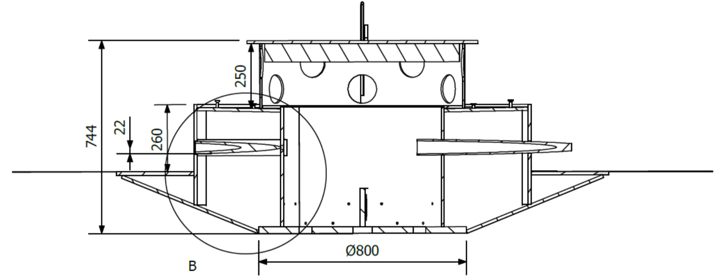
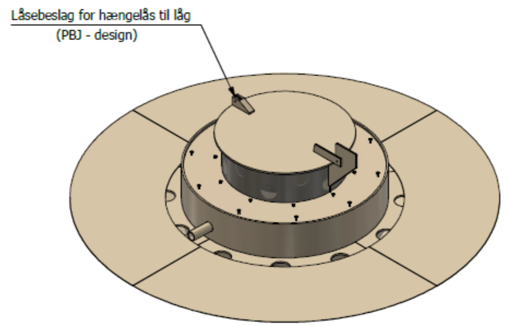
Is it possible to share an image of the pumping well and filter used in Aalborg CSP’s cover design?
Cross section of pumping well (below): Triangles in the bottoms are located on the floating liner. The small holes in the bottom of the shaft allow the vapor to enter the pumping well, where condensate is drained together with the rainwater via the drainage pump. The chambers around the shaft are filled with ballast gravel to ensure that the pump well is located at the lowest point of the lid section.
Top view of pump well (below): All parts of the pump well are covered by insulation and/or gravel, except for the lid in the top, to allow easy access to the well and the pump. The pump well is made of polymer.
Answered during Q&A session 2.2 of IEA-ES Task 45, see following link
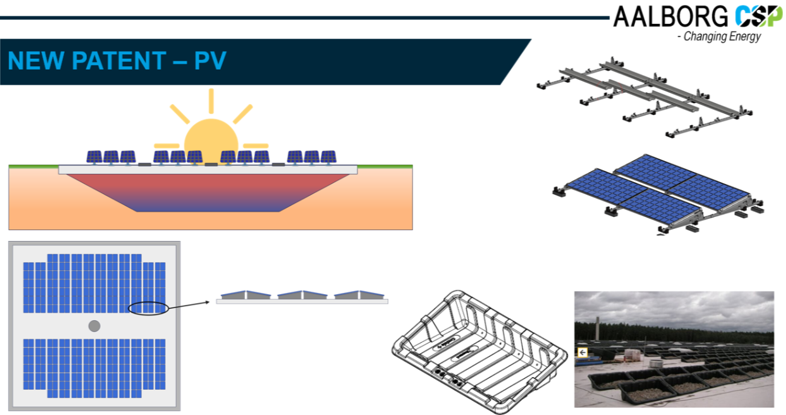
Are there any companies that have implemented or tested PTES systems where the lid serves a secondary purpose—such as integrating photovoltaics or functioning as a load‑bearing surface (e.g., for parking)—and how feasible is it to adapt a PTES lid for such dual‑use applications?
The lids used in Dronninglund, Marstal, and Høje Taastrup (Denmark) could be relatively easily adapted for secondary uses such as photovoltaic installations or light recreational activities. However, they are not designed to heavy loads (e.g. parking areas), and such applications would require a redesign. The GIGA-TES project has also explored alternative concepts, including floating structures such as houses.
It is important to distinguish between floating lids and fixed or alternative designs. Some alternative PTES concepts—using gravel/water instead of pure water—have been developed specifically to allow surface use. Examples include installations in Chemnitz (parking area), Steinfurt (private garden), and Eggenstein (schoolyard).
Aalborg CSP has recently obtained a patent for integrating photovoltaic systems on PTES lids, although this solution has not yet been implemented in practice (see the picture below). Prior to this, extensive analyses, including uplift and wind load calculations, were carried out, and the concept relies on materials similar to current lid solutions, such as gravel.
Via the TREASURE project, it was shared that two PTES will be built in China where one lid will be trafficable and in the other project the lid will become a botanical garden.
For applications involving heavy loads, such as in a 380’000 m³ PTES project in Finland, design considerations include factors like heavy snowfall. This project, currently under construction, has incorporated harsh climatic conditions (e.g. frost penetration) into its design. Excavation is scheduled to be completed by April 2026, followed by liner installation, with water filling planned for winter 2026–2027 and lid installation in 2027.
Answered during Q&A session 2.2 of IEA-ES Task 45, see following link
Cost (PTES)
Is there any practical experience with PTES installations in cold climates, and what are the implications for costs and system performance?
Designs for cold-climate PTES are still under development (e.g. within TREASURE), with a notable project currently being built in Finland (Hyvinkää). IEA-ES Task 38 has studied another solution: systems which can actively melt snow or ice forming on a given surface. Although such systems are originally designed for de-icing roads using thermal energy storage, they could also be used on a PTES cover/lid. To the best of our knowledge, no such development has been considered yet.
Not much data is available at this point about performance and cost implication.
Answered during the first webinar of IEA-ES Task 45, see following link
Stakeholders (LTES)
What are the career opportunities in the field of LTES?
Career opportunities in the thermal energy storage field are quite diverse, driven by a growing market and the development of new projects. This creates increasing opportunities for young professionals to enter and contribute to the sector.
The IEA-ES Task 45 group tries to make an effort to distribute vacancies on this topic as widely as possible. One valuable resource for discovering opportunities is the IEA Energy Storage Programme website, which often features openings, including PhD positions.
A practical way to explore work opportunities on this field is by reviewing the active tasks listed on the IEA-ES website. Each task includes a description of the participating organizations, offering insight into involved parties and the nature of their work. For example, the IEA-ES Task 45 webpage provides access to publications, presentations, and project summaries, which help illustrate the current activities and expertise of the partners. This information can be used to identify relevant contacts and reach out directly to individuals or organizations working on topics of interest. Such a network-based approach is often highly effective for discovering research and career opportunities in the field.
Answered during the first Q&A session of IEA-ES Task 45, see following link